.png)
Women’s Voices Take the Big Stage at ICM Congress
At the core of this movement are women and midwives, their powerful partnership, their joint advocacy to transform systems to center women and gender diverse people, their rights, their needs – this is the midwifery philosophy in action. In this spirit, women and women’s advocates took center stage at the International Confederation of Midwives’ 34th Triennial Congress in Lisbon, Portugal.
.jpg)
As more than 3000 midwives gathered for what felt like the midwifery Olympics, one of the most powerful speakers of the opening ceremony was women’s rights advocate, Sara do Vale, founder of Associação Gravidez e Parto representing civil society in the Portuguese Birthrights Association. She spoke of the reality that Portuguese mothers and families experience, the challenges of the public and private maternal health systems in Portugal, the strain on the health systems and difficult working conditions that midwives face, the growing overmedicalization... As advocates do, she re-energized us to keep fighting and also inspired hope and resilience:
“The solution to all of these issues is staring us in the face: Midwives. We need more midwives. That they feel empowered, that midwives are given more autonomy, that policymakers recognize that it's not up to the doctors associations to regulate how midwives work; it’s really also about cooperation... especially between midwives and civil society; that’s where the magic happens”
.jpg)
Each day of the conference was kicked off by a plenary session which featured a keynote address followed by a panel of midwifery leaders and experts.
Each plenary session was inspirational, and even more powerful to see women’s advocates (including PUSH champions), as the featured keynote in the majority of the sessions reflecting the powerful partnership between civil society and midwives.
Plenary 1 focused on One Million More Midwives with a keynote address by Dr Magda Robalo, Executive Director of Women in Global Health highlighting the need to invest in midwives and their leadership to close the one of widest gender leadership gap in health.
Plenary 2 focused on Midwives in Crises with a keynote address by Paola Salwan Daher, Senior Director for Collective Action at Women Deliver, feminist, and human rights lawyer reflected on “the anti-rights pushback” positioning midwives as human rights defenders.
Plenary 3 focused on the Midwifery Models of Care with a keynote from Janhavi Nilekani, founder of Aastrika Midwifery Centre in India, sharing her own birth story as her fuel to why she works as an advocate for women and newborns.
Plenary 4 focused on Midwives as the Original Innovators with a keynote from Professor Hege Ersdal who highlighted the Safer Births Bundle of Care and the need for innovations to meet the needs of women, their communities, and the midwives providing the care.
For more on what happened at ICM congress, read or watch the plenary in the links above, or read the recaps here
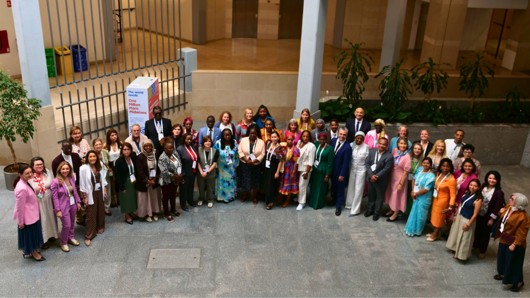
For the first time in its history, the International Confederation of Midwives (ICM) Congress convened a dedicated Parliamentary Forum, bringing together Members of Parliament, Ministers of Health, midwifery leaders, UN agencies, and global partners to strengthen political leadership for midwifery.
Parliamentarians are powerful advocates for women because they shape the laws, policies, and budgets that determine whether women can access quality healthcare, education, protection, and equal opportunities. By championing investments in midwifery and sexual, reproductive, maternal, newborn, and adolescent health, parliamentarians help ensure that women's rights, voices, and health remain national priorities.
Midwives are more than healthcare providers—they are advocates, leaders, and agents of change. That was the central message of the interactive workshop, "Building the Movement for and With Women: PUSH for rights, for women, for midwives," held at the 34th International Confederation of Midwives (ICM) Congress in Lisbon.
Bringing together midwives, advocates, communicators, and movement builders from around the world, the 90-minute session equipped participants with practical tools to strengthen advocacy, build powerful coalitions, and use strategic communications to advance woman-centred care and sexual, reproductive, maternal, newborn, and adolescent health and rights (SRMNAHR). Through inspiring lightning talks and a hands-on advocacy challenge, participants explored how to position midwifery within broader movements for gender equality, human rights, and climate justice.
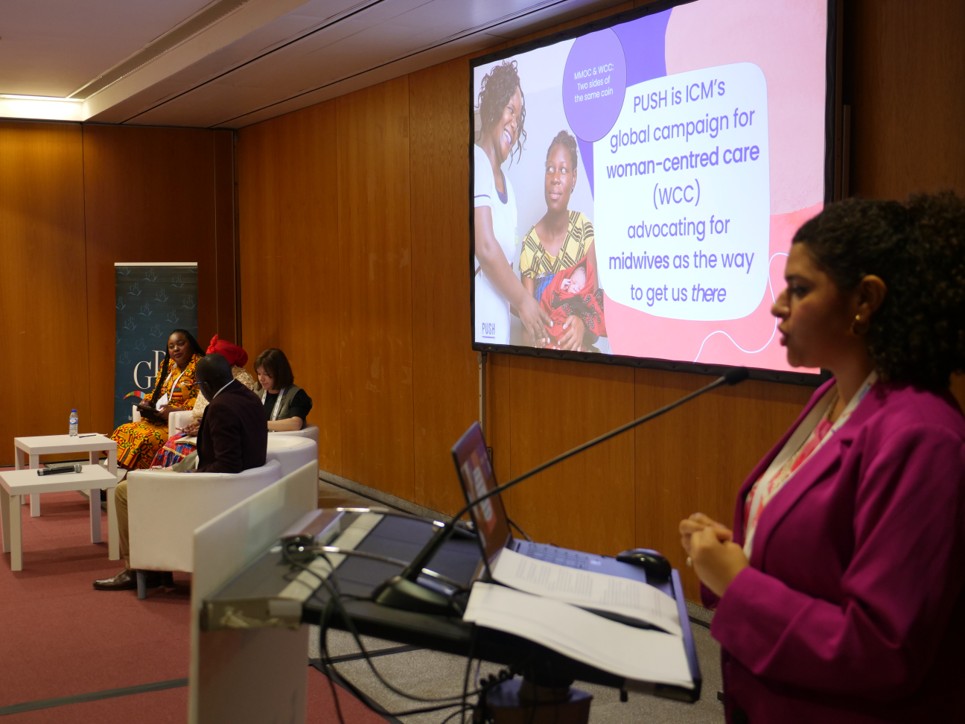
Building a Global Movement for Woman-Centred Care
Opening the session, Merette Khalil, introduced participants to the PUSH Campaign and its progress to date since it’s relaunch in 2025 as ICM's global advocacy movement for woman-centred care and midwives. Creating sustainable change requires more than evidence alone—it requires building movements that bring together communities, policymakers, civil society, and advocates around a shared vision.
Feminist Health Systems Need Midwives
The first lightning talk was delivered by Paola Salwan Daher, Head of Advocacy at Women Deliver, who explored how midwives are essential to building feminist health systems.
Paola introduced the newly launched Charter for Feminist Health Systems, emphasizing that health systems should be designed to redistribute power, centre lived experiences, and address the social and gender norms that influence health outcomes. A key part of this health systems transformation is investing in midwives is not only a health priority, but a commitment to gender equity, human rights, and social justice. She challenged participants to think beyond healthcare delivery and consider the structural inequalities that continue to limit women's rights, bodily autonomy, and access to quality care.
Building Coalitions that Drive Change
Next, Nabeeha Kazi Hutchins, President and CEO of PAI, focused on one of advocacy's most powerful tools: coalition-building.
Drawing on examples from global advocacy campaigns, she highlighted that no single organization can achieve lasting policy change alone. Successful advocacy depends on building broad alliances that bring together communities, civil society organizations, professional associations, youth leaders, policymakers, and unexpected champions.
She introduced participants to principles of SMART advocacy, encouraging them to develop advocacy asks that are Specific, Measurable, Achievable, Relevant, and Time-bound while remaining responsive to political opportunities.
Rather than viewing advocacy as a single campaign, Nabeeha emphasized that it is a long-term process of building trust, relationships, and collective power.
Telling Stories that Inspire Action
The final lightning talk came from Matt Matassa, Consultant of Communications for the Gates Institute at Johns Hopkins University and the International Conference on Family Planning (ICFP), who focused on the role of strategic communications in advocacy.
He highlighted how midwives can shape the narrative landscape. Midwives are uniquely positioned to transform narratives within maternal health, advocating for women's voices and experiences to be heard in powerful ways that influence policy and practices. He encouraged participants to think carefully about their audience before developing messages and to frame midwifery in ways that resonate with policymakers, donors, journalists, and communities.
He challenged midwives to see themselves as a witness uncovering frontline intelligence; as a translator who speak the local language, experience the context and culture, and understand community needs, and can inform actionable policy insights; as a proof providing a powerful perspective because of their lived experience and leadership – with an invitation to become midwife reporters.
Putting Advocacy into Practice
The second half of the workshop shifted from theory to action through an interactive Advocacy Shark Tank exercise coordinated by ICM’s Policy Lead, Vanessa Vera.
Building on the insights shared during the lightning talks, participants worked in small groups tackling advocacy challenges that countries face around the world, including:
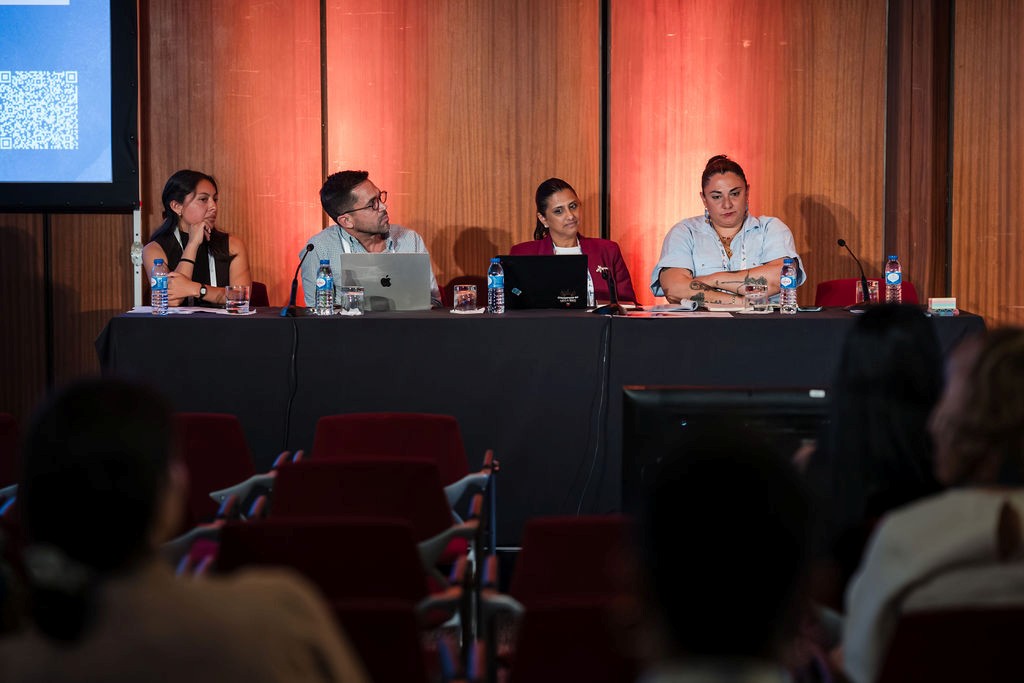
With 15 minutes to prepare, each group developed a mini advocacy campaign by defining a clear advocacy ask, identifying decision-makers, mapping allies and opponents, building a coalition, and proposing a bold communications pitch.
As Congress participants left this workshop, participants reflected about the magnitude of the global advocacy agendas ahead and the need to build alliances and strengthen partnerships beyond the health sector by engaging feminist organizations, youth movements, parliamentarians, climate advocates, journalists, and community leaders.
.png)


